Disaster Recovery - Business Continuity Planning
Standard for DR and BC - 3,000 Companies World Wide have chosen this Template
80% of all enterprises that do not have these plans never open their doors after a disaster strikes
This Disaster Recovery Plan (DRP) can be used as a template for any size of enterprise. The disaster planning template and supporting material have been updated to be Sarbanes-Oxley and HIPAA compliant. The Disaster Template comes as both a Word document and a static fully indexed PDF document. The DRP/BCP Template includes:
- Disaster Recovery Plan and Business Continuity Template (WORD and PDF)
- Business and IT Impact Analysis Questionnaire
- Work Plan
- Disaster Recovery / Business Continuity Audit Program
- Pandemic Planning Checklist
Order Disaster Plan Template Download DRP Customer Base
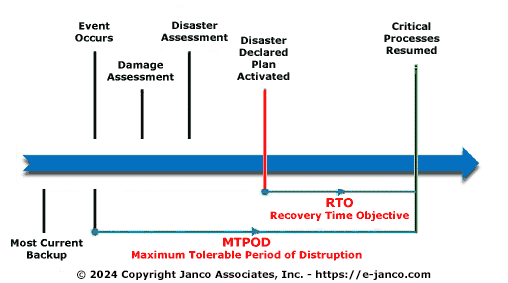
Preparation for Disaster Recovery / Business Continuity in light of mandated requirements has two primary parts. The first is putting systems in place to completely protect all financial and other data required to meet the reporting regulations and to archive the data to meet future requests for clarification of those reports. The second is to clearly and expressly document all these procedures so that in the event of a SOX audit, the auditors clearly see that the DRP exists and will appropriately protect the data.
A disaster recovery is a response to a declared disaster. It is the restoration or recovery of an entire Agent computer. A disaster recovery plan describes how an organization is to deal with potential disasters.
 Just as a disaster is an event that makes the continuation of normal functions impossible, a disaster recovery plan consists of the precautions taken so that the effects of a event will be minimized, and the organization will be able to either maintain or quickly resume mission-critical functions.
Typically, this involves an analysis of business processes and continuity needs; it may also include a significant focus on disaster prevention.
The Disaster Recovery Template (DRP) can be used for any sized enterprise.
The template and supporting material have been updated to be Sarbanes-Oxley compliant. The complete package includes:
- Disaster Recovery Plan Template
- Business and IT Impact Analysis Questionnaire
- Work Plan
With the template is a 3 page Job Description for the Recovery Manager. The Disaster Recovery Plan Template PREMIUM Bundle contains 11 additional key job descriptions.
Clients can also subscribe to Janco's DRP update service and receive all updates to the DRP Template*.
The DRP template includes everything needed to customize the Disaster Recovery Plan to fit your specific requirement.
 Planning for business and IT disruptions requires an understanding of the essentials of each of these elements:
Keep people working with business as usual
Planning for employees, business partners and customers makes up the most critical aspect of business recovery planning, Janco Associates says. Depending on the nature of the outage, you may need to figure out how and where people can continue working. For a brief period of time, everyone may need to work remotely, but you will need to have these contingency plans ready, along with automatic notification to tell employees to work at home. You can download the sample DRP below which addresses these issues.
Make accommodations for facilities
Facilities make up an important part of business recovery planning. According to the U.S. National Fire Protection Agency, 35 percent of businesses that experience a major fire are out of business with three years. So, if having everyone work at home is not the best option for your business, recovery vendors can provide interim workplaces such as prefabricated mobile offices or buildings designed specifically for use in times of crisis.
Secure information before the event
Data can make or break a business. According to the U.S. National Archives and Records Administration, 80 percent of companies without well-conceived data protection and recovery strategies go out of business within two years of a major disaster. Backup tape and storage testing services can help ensure that critical data will be available after a major outage. Ideally, says Janco Associates, backups should be performed offsite, preferably at a facility far away from everyday operations. “The best way to protect the information for a small business is to use a remote data backup facility, which actually transmits the data either overnight or at scheduled times to a remote site where it is stored. ”
Prepare alternate networking routes
Can you keep networks open - or restore them quickly? What happens if you don't have local area network (LAN) or wide area network (WAN) connectivity for an extended period of time? Or phone connections and e-mail? In the worst-case scenario, your business may not have access to any of these vital services. LAN and WAN contingency plans can include services such as remote data access so critical information can be managed and administered from any location. A fail over system for e-mail is also highly recommended, who note that keeping in touch with partners and customers can make all the difference in remaining in business. These solutions can be activated in seconds, but keep in mind that these systems need to be in place prior to an outage.
Keep technology up-to-date and aligned with recovery plans
Keep tabs on how technology is applied within your organization. This can be as simple as making sure a security patch has been correctly applied. Otherwise, recovery plans can be easily derailed when new software and hardware is added or upgraded without testing the potential consequences of changes to business technology. That's why experts like Janco Associates recommend routine system checkups, as well as longer-term business continuity and resilience planning services. “Resilience is the ability to take a blow and keep on going,” they say.
Regular checkups provide the best results
Janco Associate recommends business recovery plans be tested at least semi-annually.
“Plans go out of date very quickly,” he says. “Exercise your plan at least once every six months. People find that's when they realize what they really need to do to improve their plans.
 According to an AT&T Survey of 100 Chicago firms (revenues
<$10M), 81 have DR plans, but only 43% have fully tested
their plans within the last 12 months and 12% admitted they
have never tested their business continuity plans.
According to an AT&T Survey of 100 Chicago firms (revenues
<$10M), 81 have DR plans, but only 43% have fully tested
their plans within the last 12 months and 12% admitted they
have never tested their business continuity plans.
Next to personnel, data is your most irreplaceable asset. Networks, application hosting platforms, and end user computing environments can be replaced quickly. However, without your customer lists, product catalogs, inventory, financial records, and other operational data your business cannot recover.
A disaster recovery is a response to a declared disaster. It is the restoration or recovery of an entire Agent computer. A plan describes how an organization is to deal with potential disasters. Just as a disaster is an event that makes the continuation of normal functions impossible, a disaster recovery plan consists of the precautions taken so that the effects of a disaster will be minimized, and the organization will be able to either maintain or quickly resume mission-critical functions. Typically, disaster recovery planning involves an analysis of business processes and continuity needs; it may also include a significant focus on disaster prevention.
The Disaster Recovery Template (DRP) can be used for any sized enterprise.
The template and supporting material have been updated to be Sarbanes-Oxley compliant. The complete package includes:
- Disaster Recovery Plan Template
- Business and IT Impact Analysis Questionnaire
- Work Plan
With the template is a 3 page Job Description for the Disaster Recovery Manager. The Disaster Recovery Plan Template PREMIUM Bundle contains 11 additional key job descriptions.
Clients can also subscribe to Janco's DRP update service and receive all updates to the DRP Template
The DRP template includes everything needed to customize the Disaster Recovery Plan to fit your specific requirement.
DRP and BCP Best Practices
Proper DR BC required for a successful recovery
A best practice for disaster and business continuity is a technique, method, process, activity, incentive, or reward that is believed to be more effective at restoring the operation of an enterprise after a disaster or enterprise interruption event occurs. The idea is that with proper processes, checks, and testing, a desired outcome can be delivered with fewer problems and unforeseen complications. Best practices can also be defined as the most efficient (least amount of effort) and effective (best results) way of accomplishing a task, based on repeatable procedures that have proven themselves over time for large numbers of people.
Order DRP BCP Template DRP BCP Sample
Disaster recovery and business continuity best practices
- Focus on operations - people and process that drive the enterprise are the primary issues that DRP and BCP are controllable. Implementing a planning and recovery environment is an ideal time to define an approach based on ITIL best practices that will address the process and people issues effectively.
- Train everyone on how to execute the DRP and BCP - People are the front line when it comes to supporting the enterprise. A staff that has not been properly trained in the use of the DRP and BCP when an event occurs will we hindrance. Everyone must have the knowledge and skills to provide the right support. This not only helps reduce downtime, it also delivers better performance and a faster ROI through better and wiser use of IT assets.
- Clear definition forwhen a disaster or business interruption occurs - There needs to be a clear processes for allocating resources based on their criticality and availability requirements. This will define the “rules of the road” for who does what and when while minimizing the factors that can negatively impact enterprise operations.
- Integrate DRP and BCP with change management - Changes are inevitable in any sizable environment. It is difficult to keep up with the flood of new applications, technologies, and new tools. That is why it is essential to design, implement, and continuously improve change and configuration management processes.
- Focus on addressing issues BEFORE they impact the enterprise - When you are aiming to operate at the speed of business, after-the-fact fixes do not make the grade. These days, you need to anticipate trouble and head it off before it happens. It is important to identify risks across people, process, and technology so that appropriate countermeasures can be implemented. You should also make sure that vendors provide an appropriate level of support including proactive features such as critical patch analysis and change management support.
- Validate that all technology is properly installed - a technology solution that is properly implemented in terms of its hardware, firmware, and software will dramatically reduce problems and downtime in the future. Proper initial configuration can also save time and reduce issues with upgrades, hot patches, and other changes.
- Monitor the processes and people to know what critical - many of today's enterprises are experiencing a capacity crisis as they reach the limits of reduced budgets, older facilities and legacy infrastructures. Space is tight. Power and cooling resources are over-burdened. Implementing new solutions in inefficient environments may limit their ability to recover from an event. An assessment that examines and analyzes the enterprises environment's capabilities and requirements can provide valuable information to help improve efficiency.
A major part of the disaster recovery planning process is the assessment of the potential risks to the organization which could result in the disasters or emergency situations themselves. It is necessary to consider all the possible incident types, as well as and the impact each may have on the organization's ability to continue to deliver its normal business services.
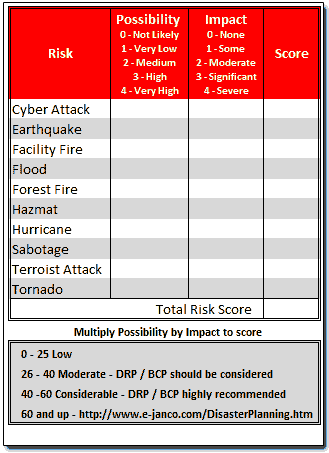
This can be complex and demanding. To assist in this risk assessment process Janco has provided a number of tools. the Exhibit on the right is one such example.
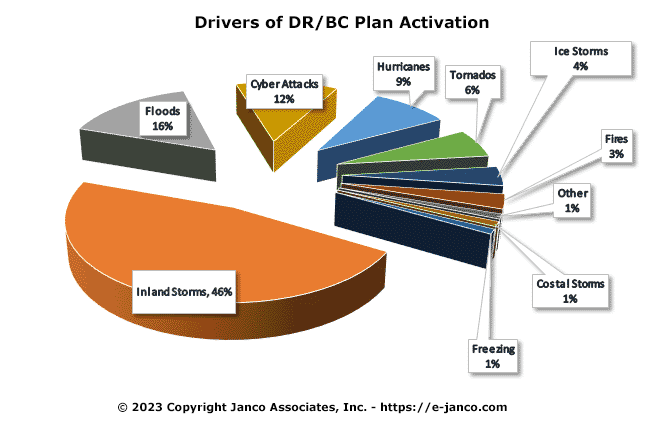
There are many potential disruptive events and the impact and probability level must be assessed to give a sound basis for progress. To assist with this process the following list of potential events has been produced:
Environmental Disasters
- Tornado
- Hurricane
- Power Grid Failure
- Flood
- Snowstorm
- Ice Storms
- Earthquake
- Electrical storms
- Brush Fire
- Forest Fire
- Structure Fire
- Sink Holes
- Landslides
Man Made Disruptions
- Terrorist Attack
- Sabotage
- War
- Theft
- Arson
- Labor Disputes
Equipment or System Failure
- Internal power failure
- Air conditioning failure
- Cooling plant failure
- Equipment failure
IT Failures and Security Breaches
- Cyber crime
- Loss of records or data
- Disclosure of sensitive information
- IT system failure
The Disaster Recovery / Business Continuity Template includes a threat and vulnerability assessment tool to aid you in classifying the risks enterprises face.
Why Recovery Plans Fail
Over a six month period Janco Associates interviewed managers and executives in enterprises of all sizes that had experienced a business interruption and had to take some sort of action to continue their operations. Only 67 of the 186 Interviewees were able to recover with no major problems. 119 of the others faced some issue with their recovery efforts.
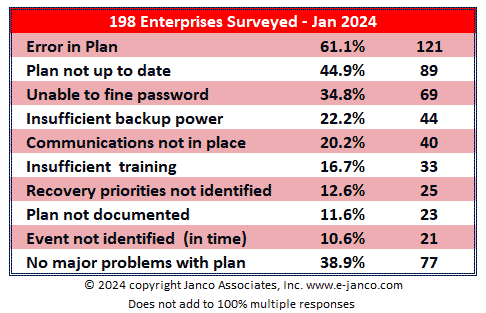
The most common issue and occurring in 62% of all recovery plans are errors in the plan itself. This is often due to the plan not being kept up to date (47%) and the unavailability or inaccurate passwords (34%).
Order DRP BCP Template DRP BCP Sample
Recovery plan chosen by over 3,000 enterprises worldwide
The DRP template is over 200 pages and includes everything needed to customize the Disaster Recovery Plan to fit your specific requirement. The electronic document includes proven written text and examples for the following major sections of a disaster recovery plan:
- Plan Introduction
- Business Impact Analysis - including a sample impact matrix
- DRP Organization Responsibilities pre and post disaster - drp checklist
- Backup Strategy for Data Centers, Departmental File Servers, Wireless Network servers, Data at Outsourced Sites, Desktops (In office and "at home"), Laptops and PDA's
- Recovery Strategy including approach, escalation plan process and decision points
- Disaster Recovery Procedures in a check list format
- Plan Administration Process
- Technical Appendix including definition of necessary phone numbers and contact points
- Job Description for Disaster Recovery Manager (3 pages long) - entire disaster recovery team job descriptions are available
- Work Plan to modify and implement the template. Included is a list of deliverables for each task. (Risk Assessment and Vulnerability Assessment)
Click on the link below to get the DRP/BC sample pages now and make it part of your disaster recovery toolkit.